The Tucson AC Maintenance Calendar: Month by Month
Tucson HVAC care is a calendar with four real appointments: spring service before the heat, dust discipline through summer, the monsoon changeover, and fall's honest accounting.
Read the Guide
Desert duty spends equipment faster than the national lifespan figures assume - run-hours, attic and rooftop heat, and dust are the three taxes every Tucson system pays.
Problem: Desert duty spends equipment faster than the national lifespan figures assume - run-hours, attic and rooftop heat, and dust are the three taxes every Tucson system pays.
Solution: Read life by equipment type and by condition, not by birthday: the same model can honestly serve twelve years or twenty depending on installation and maintenance.
When to call: Call for a remaining-life read when repairs start stacking, when the system enters its teens, or before a home purchase or sale makes the answer worth money.
Every equipment brochure carries a lifespan story, and almost none of those stories were written in the desert. The homeowner who plans by the catalog number - fifteen to twenty years, say the charts - plans wrong in a consistent direction: Tucson spends cooling equipment faster than the climates that produced the averages. This guide lays out what the valley's systems actually give, type by type, and how to read where yours stands.
The equipment stock matches the city's history: evaporative coolers on the oldest adobe and postwar housing, rooftop package units on the flat-roofed brick ranches of midtown and the east side, split systems in the subdivision decades, and heat pumps across the newer master-planned communities. Each carries its own Tucson fate - the cooler's monsoon limits, the package unit's baked roof life, the split system's attic ducts - and the pages here are organized around exactly that.
Start with the anchors. A split system or heat pump in the valley, properly installed and maintained, commonly serves in the low-to-mid teens of years - the honest center of the distribution. Rooftop package units on Tucson's flat roofs live at the harder end: baked by direct sun on a black roof, they tend to give up their compressors and cabinets a year or three sooner than their ground-level twins. Evaporative coolers invert the whole idea: the machine endures for decades while its pads, pumps and pans are consumed on a rhythm of seasons.
Then the short accounts. The neglected system - unfiltered air, caked coils, a slow leak run for years - can be old at eight. Builder-grade equipment installed by the tract-load starts with a handicap: sizing by formula, ducts by habit. And the second system in a two-system house, often the smaller upstairs or casita unit, ages on its own neglected schedule behind the main unit's shadow. The honest summary: a Tucson yard is a portfolio of clocks, and the plan follows the fastest one.
Run-hours are the main spender. A compressor in Phoenix-grade heat logs in one summer what a mild-climate machine logs in three, and Tucson's summers are measured in months of daily duty, not weeks of occasional use. Wear in rotating machinery is counted in hours and starts far more honestly than in years - the calendar is the brochure's unit, not the machine's.
Heat and dust spend what is left. Rooftop and attic environments degrade cabinets, insulation and electronics on their own schedule; dust loads coils and filters into efficiency losses that make the machine run longer to do the same work, compounding the hours. This is why desert systems so often look 'fine for years, then suddenly old': the spending is invisible until the account runs low, and the failures arrive together when it does.
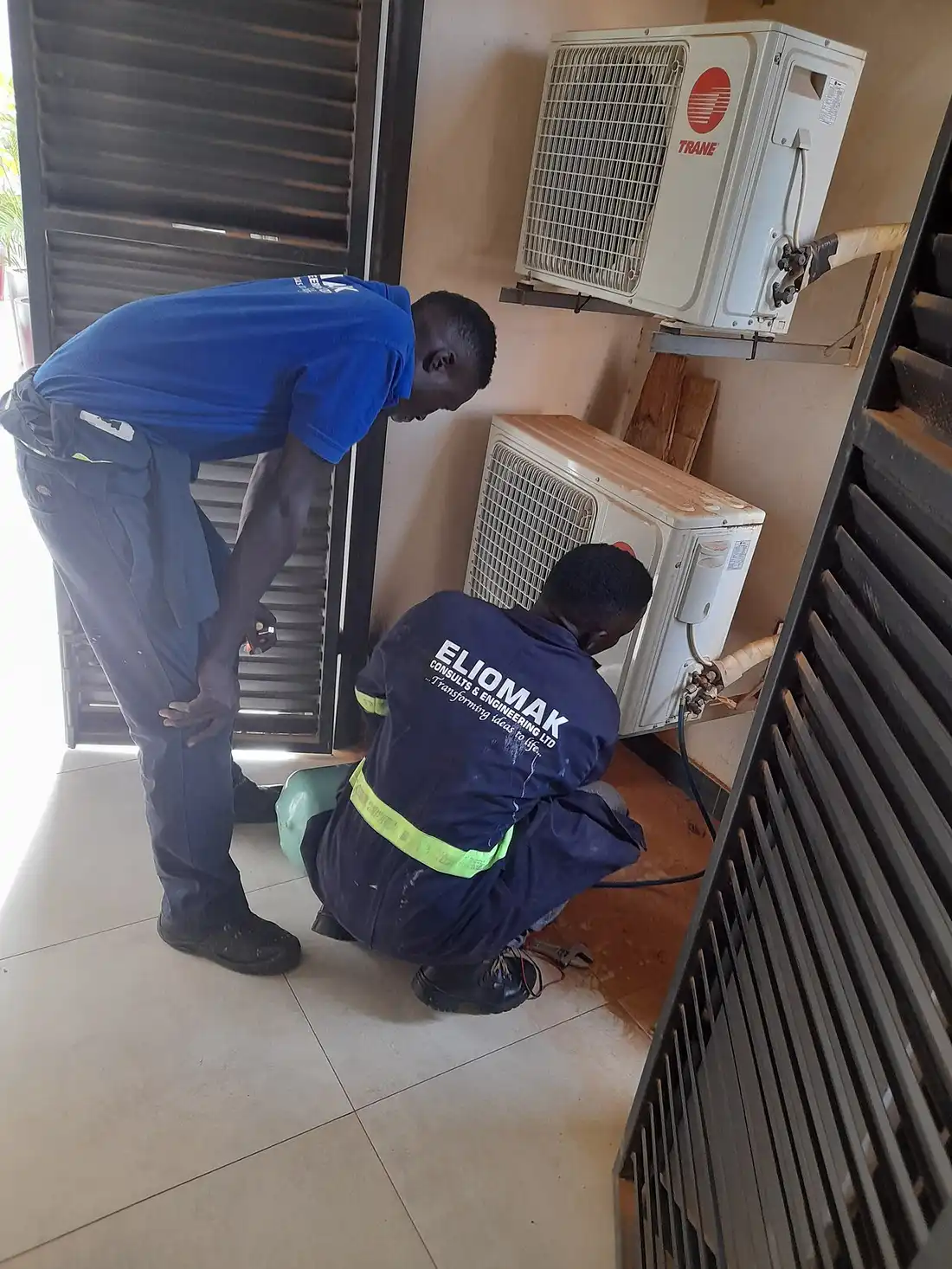

Appearance lies politely; evidence does not. Cooling capacity against the afternoon, energy drawn against the bill's history, the repair pattern across the last three summers - these are a system's true age in print. A machine whose capacity fades a degree a year is telling you its compressor's remaining story with unusual honesty, if someone measures it the same way each spring.
The nameplate is the other witness: manufacture date, refrigerant type, and the model's parts situation. An old refrigerant alone can retire a system whose machinery still turns - every recharge costs more as the supply thins. When a technician gives you a remaining-life range, it should be traceable to this kind of evidence, because that is also the evidence that decides repair-versus-replace arguments later.
Walk any Tucson subdivision and the equipment map is visible: the original unit on one roof from the year the street was built, a mid-life replacement beside it, a new high-efficiency system across the street. Remaining life is therefore a set of numbers, not one - and plans that honor that (a replacement budgeted while the old machine still runs) extract the full value of every system instead of mourning them in sequence.
The same is true across the valley: the dust of one decade loads more coils than any single storm, and the installation fashions of another load the future failure calendar. When comparing your system's fate to a chart's promise, compare installation and maintenance history, not birthdays - the variables that decide lifespan are humming in the side yard and written in the service record, not on the nameplate.
Every long-lived system contains smaller clocks that reset its big one: the capacitor replaced at year seven, the ducts sealed at year nine, the coil kept clean every single spring. Plotted on one calendar, a system's life stops looking like a countdown and starts looking like a schedule - and schedules, unlike countdowns, can be planned and budgeted calmly.
This is also the answer to the 'how long will it last' question that respects the asker: the system will last as long as its renewals happen and its luck holds. The machines that beat their ranges are not lucky in the end; they are calendared.
An installation should be judged the way the desert will judge it: at four in the afternoon, in the third week of June, in year ten. By that measure the equipment brand is the junior partner. The senior partners are the load calculation, the duct system, the airflow balance and the commissioning numbers recorded on day one - the invisible work that decides whether the visible box ever gets to show what it can do.
That is the service side of this guide's subject. When you are ready, the AC Installation & Replacement page carries the process, the coverage by neighborhood and the number to call.
Nameplate first: type, manufacture date, refrigerant. Each type has a desert range, and the range is the frame for everything else.
Compressor health, coil condition, airflow and controls each get a read; the weakest part sets the plan, the way the weakest tree part sets a tree plan.
Measure your system's age in run-hours and condition, not in the catalog's climate - and weight its repair pattern heaviest.
A replacement chosen in October, on evidence, beats the same replacement chosen in a July panic in every way that matters.
Photograph the nameplate of every unit on the property; type and manufacture date are the file's first page.
Log repairs and events with dates and costs in the system file - patterns are only visible in lists.
Grade remaining life by the weakest measured part, and plan the budget by that grade.
Schedule the successor conversation while the incumbent still runs - the planning is free, the panic is not.
When you request a lifespan assessment, expect a system-by-system condition report: type and true age, capacity delivered against expectation, coil and compressor health, refrigerant situation, duct condition, and a remaining-life estimate stated as a range per system with the reasoning shown.
You should also receive the succession calendar - what comes due, in what order, and what waiting would cost - so the property's cooling years are managed as a plan rather than discovered as emergencies.
A professional lifespan read is quantitative: capacity delivered against the afternoon, amp draws and pressures against specification, the repair history read as a trend rather than a list. The output is a range with reasons - this compressor's pattern, that refrigerant's economics, the ducts' condition - so the owner's replacement timing is a decision built on evidence, revisitable at each annual read.
Budgeting by the catalog's lifespan and being ambushed by the desert's: The ranges in this guide are the local ones; the brochure's climate is not yours.
Replacing a sound system for its birthday while its ducts leak on: The new machine inherits the old air path and the old complaints, at new prices.
Spending a major repair into a system in its final pattern: One repair is maintenance; three in two summers is a message about where the money belongs.
The casita and upstairs units age unattended behind the main unit - and fail on guest weekends with eerie precision.
Read your systems' ages in run-hours and repair patterns, not birthdays, and their story gets more manageable, not less: most of what the desert takes can be renewed on schedule, and most of what surprises owners was a renewal wearing a disguise. A single call gets the system-by-system read started - and turns 'how long do I have?' into a calendar instead of a guess.
Tucson HVAC care is a calendar with four real appointments: spring service before the heat, dust discipline through summer, the monsoon changeover, and fall's honest accounting.
Read the GuideA heat pump is one machine doing the work of an air conditioner and a furnace - and Tucson's mild winters sit almost exactly in its efficient range.
Read the GuideIt depends entirely on the type and the condition. Twelve is end-of-range for a hard-run rooftop package unit, mid-life for a maintained ground split system, and barely relevant for a cooler's cabinet. Age starts the conversation; the part-by-part grades and the repair pattern finish it.
Installation and luck, in that order. Two same-model systems diverge from day one: one sized and charged by measurement on sealed ducts, one copied from the old unit's size on leaking ducts - and the second machine runs longer every day of its life to do the same work. Maintenance widens the gap annually. The nameplates match; the lives do not.
Yes - it is the one variable fully in the owner's control. Clean coils reduce head pressure and compressor strain; correct charge prevents the slow kills; caught-early electrical wear prevents the cascade failures. Maintenance cannot rescue a spent compressor, but across a system's life it routinely moves the replacement date by years.
Usually the supporting cast before the star: capacitors, contactors and fan motors lead the failure lists, then refrigerant leaks, then the compressor itself. That ordering is good news disguised as bad - the parts that fail first are the parts annual service catches earliest.
One call connects you with an HVAC professional serving Tucson and the surrounding communities - assessment, repair, service and installation.
📞 Call Now