Tucson HVAC Services

AC Installation & Replacement in Tucson, AZ

AC installation and replacement in Tucson - systems sized for Sonoran Desert load, matched to the house's ducts and glass, and set up to still deliver on the third week of June.

The monsoon is the second force, and it changes the problem rather than pausing it. From July into September the humidity arrives with the storms, evaporative coolers lose their edge exactly when the heat is still high, and refrigerated systems suddenly carry a moisture load they never see in May. Dust rides the same storms - haboobs and outflow winds cake outdoor coils and load filters in a single evening.

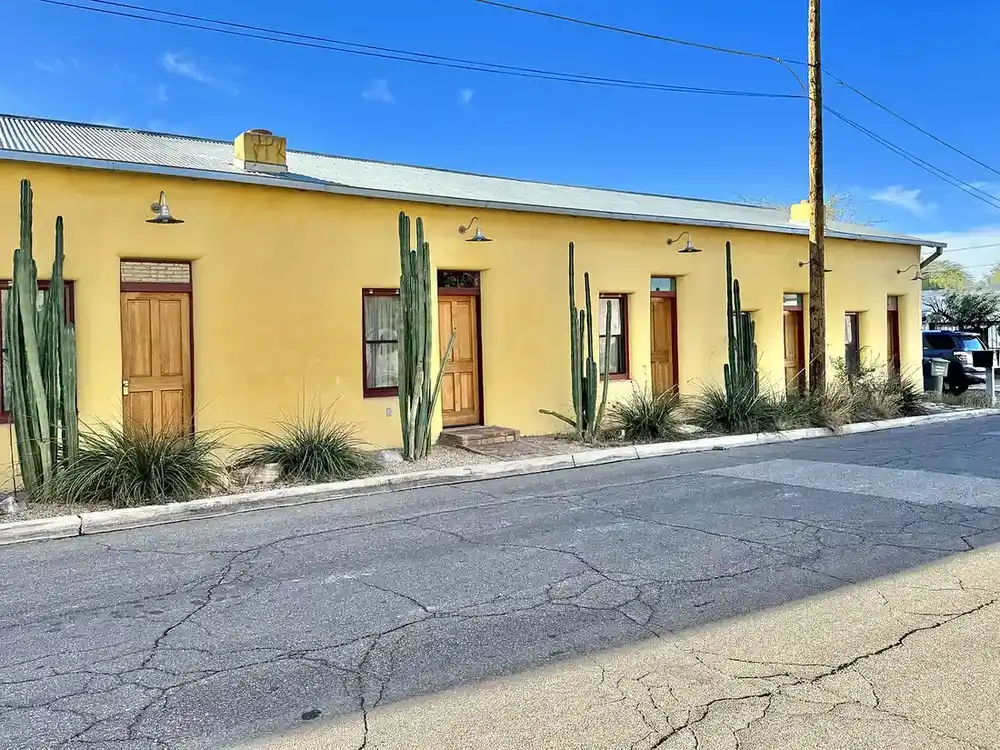
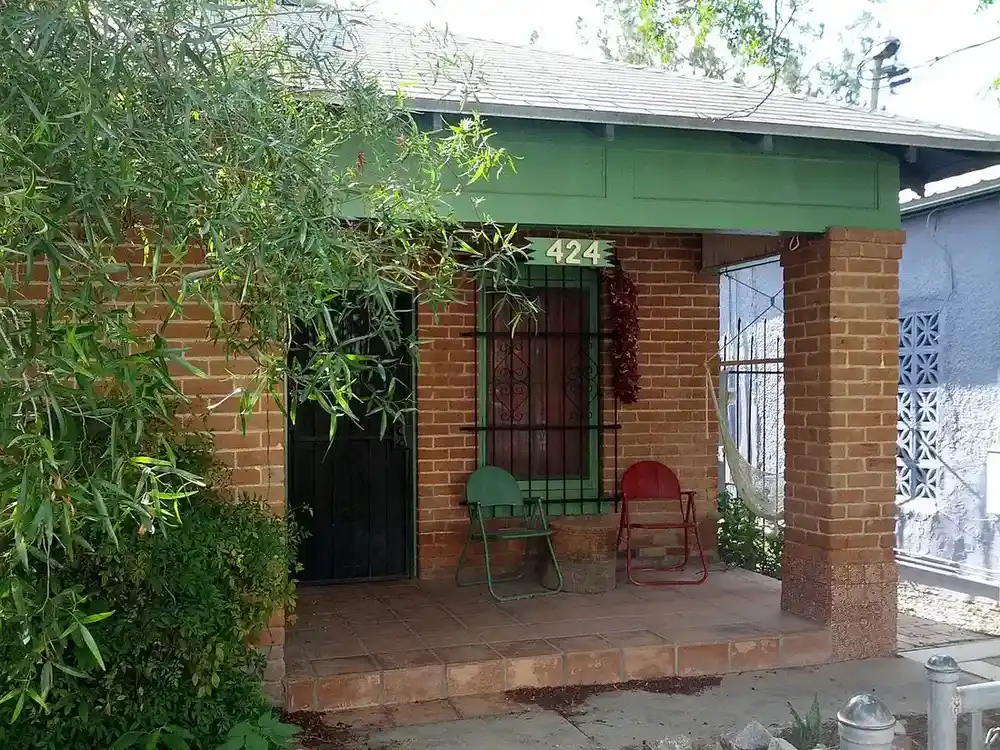
The equipment stock matches the city's history: evaporative coolers on the oldest adobe and postwar housing, rooftop package units on the flat-roofed brick ranches of midtown and the east side, split systems in the subdivision decades, and heat pumps across the newer master-planned communities. Each carries its own Tucson fate - the cooler's monsoon limits, the package unit's baked roof life, the split system's attic ducts - and the pages here are organized around exactly that.

Signs You Need AC Installation & Replacement

Repairs are becoming a season ticket

Two or three repair calls in two summers is a pattern, not bad luck - the system is spending its remaining life in installments, and each installment costs more than the last.

The compressor or coil has failed

The two big-ticket failures in any system. On an older unit, either one turns a repair conversation into a replacement conversation, honestly and immediately.

The house has a permanent hot zone

If one side of the house has never cooled - through two thermostats and a decade of summers - the system, its sizing or its ducts were never right, and replacement is the moment to fix the design, not just the box.

Bills rise while comfort falls

The classic end-of-life signature: the system runs longer every summer to deliver less cooling. The gap between what it costs and what it does widens until replacement is the cheaper direction.

The unit uses an old refrigerant

Systems built for phased-out refrigerants become expensive to keep: every recharge and coil repair costs more as the refrigerant gets scarcer. Age plus refrigerant is a strong replacement argument.

You are planning to stay in the house

Replacement arithmetic changes with horizon. A system you will live with for fifteen summers should be chosen for those summers - sized, ducted and controlled properly - not for this one.

Why AC Installation & Replacement Is a Standing Job in Tucson

Replacement in Tucson is a design job disguised as a purchase. The load calculation reads the house the way the sun does: orientation, glass, insulation, duct location, the attic's brutal summer temperature. Two houses with identical floor plans on the same {area} street can honestly need different systems - one shaded by the Catalinas' evening shadow, one roasting on an exposed corner.

Ducts decide more replacements than compressors do. A new high-efficiency unit pushing air through leaking, undersized attic ducts delivers old-system comfort at new-system prices. The installations that transform a house pair the equipment with duct sealing, return-air fixes and airflow balancing - unglamorous work that shows up every afternoon for twenty years.

Timing is the third factor. Planned replacements happen in the mild months, when the work can be done carefully and the house never sits uncooled. Emergency replacements happen in a heat wave under time pressure. The same system, the same house - the planned version is almost always the better installation, which is why an honest remaining-life read in spring is worth money in June.

AC Installation & Replacement Through the Tucson Year

Spring is the preparation season in Tucson, and everyone who has lived through a June here knows it. March through May is when systems get their honest read: refrigerant charge, airflow, duct condition, cooler pads and pumps - while the weather is still mild enough that a discovered problem is an appointment, not an emergency. The first 100-degree day usually arrives before May is out, and it collects every debt the spring skipped.

Fall is the assessment and planning window. The brutal season is past, the equipment has just told you exactly what condition it is in by how it survived, and there is time to repair what limped, replace what failed on paper, and plan the work before next June writes the exam again. It is also when honest HVAC advice happens, because a system inspected in October is being judged on evidence, not on hope.

Summer splits in two: the dry furnace of June and early July, when the heat is at its peak and systems run from mid-morning to past midnight, and the monsoon weeks that follow, when humidity joins the heat and the failure mode changes. Most breakdowns are discovered in summer - the wear happened across a decade of summers, and the hottest week is simply when the margin runs out. Shade, airflow and a clean coil are the season's quiet essentials.

AC Installation & Replacement in Depth

An installation should be judged the way the desert will judge it: at four in the afternoon, in the third week of June, in year ten. By that measure the equipment brand is the junior partner. The senior partners are the load calculation, the duct system, the airflow balance and the commissioning numbers recorded on day one - the invisible work that decides whether the visible box ever gets to show what it can do.

There is also the matter of proof. In a valley where comfort complaints and resale inspections both turn on documentation, an installation file - load calculation, duct scope, measured airflow and charge at start-up - is the difference between a system documented as designed and a system argued to be oversized, undersized or neglected. Installers who hand you that file unprompted are telling you how they run the rest of the job.

Choosing the Right Help

Choosing an installer matters more than choosing a brand - the same equipment cools two identical Tucson houses differently under two installations. Ask for the load calculation, the duct scope in writing, and the commissioning numbers at start-up. An installer who offers all three unprompted has answered the only question that decides your next fifteen summers.

The Climate Behind It

Tucson sits in the Sonoran Desert at the meeting of five mountain ranges, and the desert writes the cooling calendar here: a long, fierce summer in which June afternoons pass 110 degrees, a monsoon season that trades dry heat for humid heat overnight, and winters mild enough that heating is a supporting act. An air conditioner in Tucson is not a comfort appliance - for a large part of the year it is the system the house cannot be lived in without.

Heat load is the signature force. A Tucson roof in June absorbs sun from before nine until after six, attic temperatures climb far past anything the equipment below was tested at, and west-facing glass turns rooms into solar ovens by late afternoon. A system's real rating in this city is not its nameplate - it is what it still delivers at four in the afternoon in the third week of June, after a decade of desert summers.

How AC Installation & Replacement Works

Calculate the load, do not copy the old size

The house is measured and read - orientation, glass, insulation, ducts - and the system is sized to the real load, not to the nameplate being replaced.

Inspect the air path

Ducts, returns and registers are checked and their fixes scoped with the equipment, so the new system breathes through a path that deserves it.

Set out the full scope in writing

Equipment, duct work, controls, permits and what happens to the old unit - the whole job, priced as one scope before it starts.

Install, then commission by measurement

Airflow, charge and temperature splits are measured and recorded at start-up - the installation is verified, not assumed.

Doing It Yourself vs a Professional

The DIY Route

  • Buying a bigger unit 'for safety' overshoots the load - short cycles, clammy rooms and a compressor that wears out early
  • Reusing the old line set and ducts without inspection imports the old system's problems into the new one's warranty years
  • Skipping permits and load calculations saves a day and costs a decade of afternoons
VS

The Professional Route

  • Sizes from a load calculation on your actual house, not from the outgoing unit
  • Scopes the ducts and returns as part of the job - and says so in writing
  • Commissions by measurement at start-up and hands you the numbers

Keep It From Coming Back

A replacement's quality is decided before the equipment arrives and after the crew leaves, as much as during the work itself. These habits protect both ends of the job.

  • Get a remaining-life read while the old system still runs - planned replacements beat emergency ones on every axis.
  • Fix the ducts with the system, or before it: new equipment on bad ducts is the most common wasted money in Tucson HVAC.
  • Keep the commissioning paperwork - measured airflow and charge at start-up - with the house file; every future technician will thank you.
  • Register and keep the maintenance rhythm from the first season; a new system's second decade is decided in its first.
  • Size for the house you have after planned changes - the planned addition and the window replacements change the load.
AC Installation & Replacement in the Surrounding Communities

The communities around Tucson share its heat and its monsoon - with their own twists of elevation, housing age and desert-edge exposure.

AC Installation & Replacement in Corona de Tucson

Corona de Tucson is the quiet community on the Santa Rita Mountains' north slope, south of the city along the road to Sonoita: 1970s ranchettes joined by newer subdivisions, all facing north across the whole Tucson valley. Nights cool faster here than anywhere on this list - elevation and open slope see to that.

AC Installation & Replacement in Sahuarita

Sahuarita is the fast-growing town twenty minutes south on I-19: Rancho Sahuarita's lake-centered master plan, newer subdivisions along the Santa Cruz valley, and pecan country toward Green Valley. It has grown from ranch land to a full suburb in a generation, and its rooftops are correspondingly young.

AC Installation & Replacement in Green Valley

Green Valley is the valley's retirement country: a 55-plus community of single-story homes, townhouses and patio homes built from the 1960s onward below the Santa Ritas, famous for its recreation centers and its seasonal residents. Summer empties a share of its streets as winter visitors leave - and the houses they leave behind still face the full desert summer.

AC Installation & Replacement in Catalina

Catalina spreads across the high plain north of the Santa Catalina Mountains: the SaddleBrooke retirement communities, the older ranching settlement along Oracle Road, and new subdivisions at the range's feet. At a higher elevation than the city, it trades a few degrees of heat for long views of the range's whole northern face.

Where AC Installation & Replacement Is Needed Most

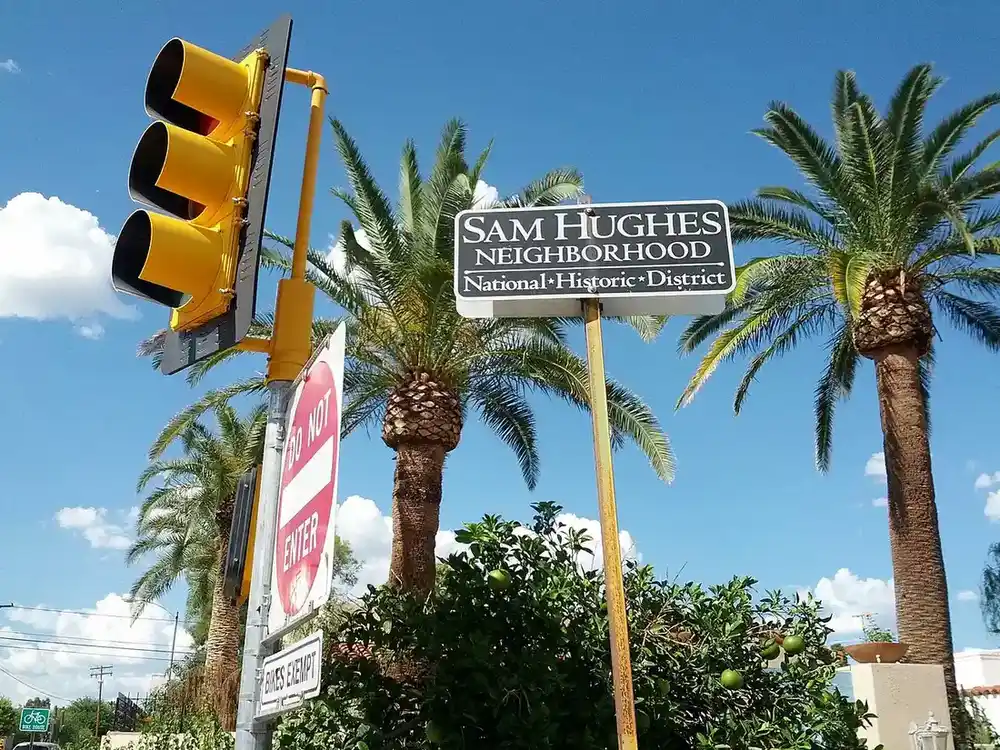
In the historic core and the central neighborhoods - Downtown Tucson, Barrio Viejo, Armory Park, University Area, Sam Hughes and Midtown Tucson, Menlo Park, South Tucson, Eastside Tucson, Tanque Verde - the equipment runs from the valley's oldest rooftop package units and surviving swamp coolers to the split systems of the postwar subdivisions, and ac installation & replacement follows that record: legacy equipment care on the older streets, first-replacement decisions in the subdivisions, and heat exposure that grows toward the open edges.

Across the east side, the foothills and the northwest growth side - Catalina Foothills, Sabino Canyon Area, Casas Adobes, Flowing Wells, Northwest Tucson, Oro Valley and Marana, Picture Rocks, Drexel Heights, Valencia West, Rita Ranch, Vail - sit the subdivision waves of the 1970s onward, the foothills' custom stock and some of the valley's heaviest cooling loads, which together make this the steadiest ac installation & replacement territory in the city.

Beyond the city line, the same work runs in Corona de Tucson, Sahuarita, Green Valley, Catalina, Three Points, Avra Valley - fast-growing suburbs, retirement communities and desert-edge towns where elevation, acreage homes and wide-open exposure add their own chapters. Every one of these area pages carries the local detail for ac installation & replacement in that community.

Coverage, In Full

AC Installation & Replacement runs across the whole service map: Downtown Tucson, Barrio Viejo and Armory Park; the University Area and Sam Hughes; Midtown; Menlo Park and South Tucson; the Eastside; Tanque Verde and Sabino Canyon; the Catalina Foothills; Casas Adobes and Flowing Wells; Northwest Tucson; and beyond the city in Oro Valley, Marana, Picture Rocks, Drexel Heights, Valencia West, Rita Ranch, Vail, Corona de Tucson, Sahuarita, Green Valley, Catalina, Three Points and Avra Valley. One call covers all of it - the local pages above carry the detail for each. If your street is not named here, call anyway: routes grow with demand, and most Pima County addresses are already within reach of a scheduled run.

From the Tucson HVAC Guides

How Long Does an AC Last in Tucson's Desert Heat?

Desert duty spends equipment faster than the national lifespan figures assume - run-hours, attic and rooftop heat, and dust are the three taxes every Tucson system pays. Read life by equipment type and by condition, not by birthday: the same model can honestly serve twelve years or twenty depending on installation and maintenance.

Read the Guide

Why Is My AC Not Cooling? A Tucson Troubleshooting Guide

An AC that runs without cooling is reporting a specific failure through a small set of symptoms - airflow, temperature split and the outdoor unit's behavior narrow it fast. Work the order: thermostat and filter first, then airflow, then what the equipment is doing outside - and stop at the line where gauges and meters take over.

Read the Guide

Why One Room Is Always Hot: A Tucson Duct Guide

A single hot room is a distribution finding, not an equipment verdict: the air is being made - it is not arriving, or the room's load is outrunning its share. Read it in order: the run feeding the room, the return path out of it, the pressure with the door closed, and the sun the room absorbs.

Read the Guide

AC Installation & Replacement Questions

How long should a new AC last in Tucson?

Desert duty is harder than the national averages assume. A properly installed, maintained system in the valley commonly serves in the mid-teens of years, sometimes longer; the installation quality and the maintenance rhythm decide which end of the range a given system reaches.

Is a heat pump or a traditional AC with furnace better for Tucson?

Both are proven here. Heat pumps handle Tucson's mild winters efficiently and cool identically in summer; a gas furnace gives a different heat feel and suits homes with existing gas service. The house's fuel, ducts and your horizon decide it - it is a design question, not a brand question.

What is the most common installation mistake in Tucson?

Copying the old unit's size and skipping the ducts. The outgoing system was often sized by a rule of thumb in a different decade, for a house with different windows and insulation. The installation that measures the load and the air path is the one that still feels right in year ten.

What affects the cost of an AC replacement in Tucson?

Capacity and efficiency class, the fuel and system type, duct modifications, electrical work, access - rooftop versus ground - and permits. Two houses on the same street can honestly differ. The scope follows the load calculation and the duct inspection, and real numbers follow that scope.

How do I know my Tucson home needs a replacement, not another repair?

The pattern decides: system age in desert years, the size of the failed part, the repair history, and whether comfort has been declining while bills climb. A single failed part on a sound system is a repair; a major failure on an old, declining system is the replacement conversation, and an honest assessment lays out both.

What size AC does a home in Tucson need?

The size the load calculation says - which reads your house's orientation, glass, insulation, duct location and occupancy. Tucson's sun makes rules of thumb based on square footage alone unreliable in both directions: too small loses the June afternoons, too big short-cycles and leaves the monsoon's humidity in the house.

Should ducts be replaced with the system in Tucson?

Inspected, always; replaced, when the inspection says so. Leaking or undersized ducts are behind a large share of 'new system, same hot room' stories. Sealing, resizing a choked return or replacing a failed run is usually scoped with the installation - the equipment is only half the system.

How long does an installation in Tucson take?

A straightforward like-for-like replacement is typically a day of work; installations with duct changes, electrical work or a conversion from evaporative cooling run longer and are scheduled as such. The scope visit is what sets the honest timetable for your house.

Please note: Tucson HVAC Pros is an independent directory and referral service, not an HVAC contractor. The professionals reachable through this site are independent businesses; any agreement for work is between you and the professional you engage. Service information on this site is general educational material - the scope of any real HVAC work is set by an on-site inspection.

An AC That Quit in the Heat, a Room That Will Not Cool or a System Due for Service?

One call connects you with an HVAC professional serving Tucson and the surrounding communities - assessment, repair, service and installation.

📞 Call Now
📞 Call Now