HVAC Service Through the Tucson Year
Spring is the preparation season in Tucson, and everyone who has lived through a June here knows it. March through May is when systems get their honest read: refrigerant charge, airflow, duct condition, cooler pads and pumps - while the weather is still mild enough that a discovered problem is an appointment, not an emergency. The first 100-degree day usually arrives before May is out, and it collects every debt the spring skipped.
Fall is the assessment and planning window. The brutal season is past, the equipment has just told you exactly what condition it is in by how it survived, and there is time to repair what limped, replace what failed on paper, and plan the work before next June writes the exam again. It is also when honest HVAC advice happens, because a system inspected in October is being judged on evidence, not on hope.
Tucson winters are mild with sharp edges: bright days in the sixties and seventies, desert nights that can drop below freezing, and cold snaps that test heat pumps and furnaces that slept all summer. Winter is a good service season here - heating checks, duct work and planned replacements happen without the summer queue - and the systems read in winter get their fixes long before the spring heat starts its own inspection.
HVAC Service in Depth
The useful way to think about a Tucson house is as a system of loads on different clocks: the compressor starting its twelfth summer, the duct run that has leaked since the house was built, the thermostat still running a stranger's schedule. General HVAC service is the discipline of reading all of those clocks at once and spending the owner's money where the comfort and the risk actually sit.
That is why good HVAC advice always starts with the whole-system walk. The right job for a given house - repair, service, seal, replace, or deliberately leave alone - is not a sales category; it is the output of its grades. Owners who learn to ask for the grades, and the reasoning behind them, make better decisions than owners who ask only for a total, because the total hides everything that matters.
Choosing the Right Help
Choosing HVAC help in Tucson comes down to one test: does the visit start with measurement or with a pitch? Ask what will be measured - charge, airflow, duct condition, electrical values - and how the findings will be left with you. A service that measures first and explains in plain language will still be explaining, patiently, at the end of the job; a service that opens with equipment ages and replacement talk has told you its method in advance.
The Climate Behind It
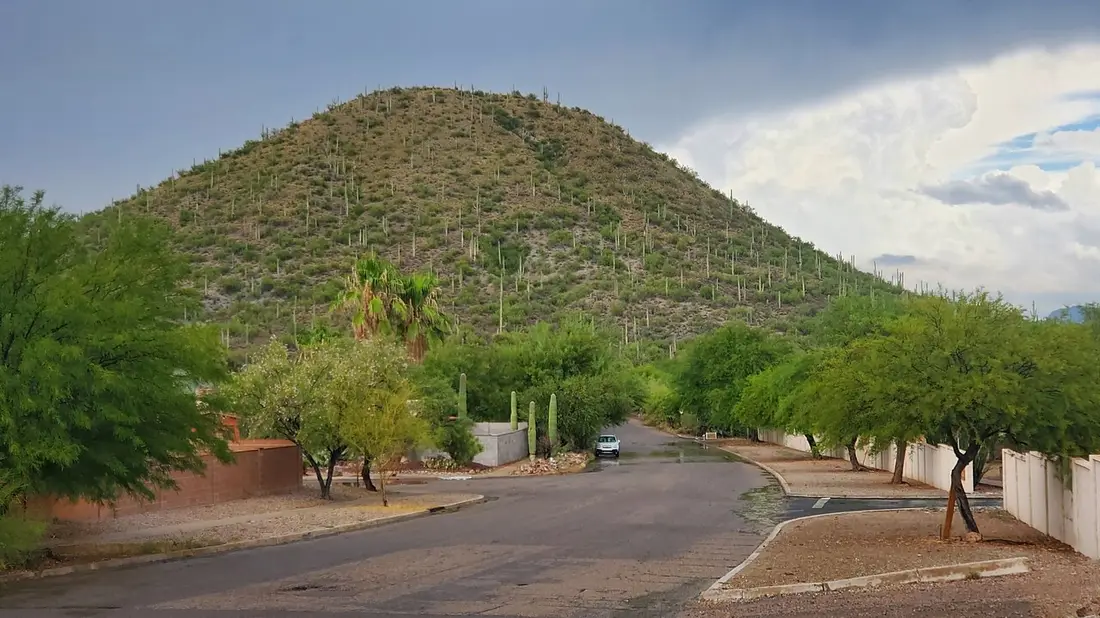
Tucson sits in the Sonoran Desert at the meeting of five mountain ranges, and the desert writes the cooling calendar here: a long, fierce summer in which June afternoons pass 110 degrees, a monsoon season that trades dry heat for humid heat overnight, and winters mild enough that heating is a supporting act. An air conditioner in Tucson is not a comfort appliance - for a large part of the year it is the system the house cannot be lived in without.
Heat load is the signature force. A Tucson roof in June absorbs sun from before nine until after six, attic temperatures climb far past anything the equipment below was tested at, and west-facing glass turns rooms into solar ovens by late afternoon. A system's real rating in this city is not its nameplate - it is what it still delivers at four in the afternoon in the third week of June, after a decade of desert summers.
How HVAC Service Works
Read the whole system
The visit covers cooling and heating equipment, airflow, ducts, thermostat and the house's exposure - so the plan starts from evidence, not from the one symptom you called about.
Sort repair, maintain and replace
You hear plainly what is sound, what needs work now, what needs watching - and why, part by part, in writing.
Do the work in the right order
Cooling restored first, efficiency and airflow second, cosmetics last. A house that cannot hold temperature outranks everything else on the list.
Leave a care rhythm
You get the findings in plain language and the service timing that fits your system and this desert calendar.
Doing It Yourself vs a Professional
The DIY Route
- Replacing a thermostat without checking compatibility can leave a heat pump calling for heat in July
- Adding refrigerant without finding the leak buys a few weeks and spends the compressor
- Closing vents to 'push' air to hot rooms raises duct pressure and makes the real problem worse
VS
The Professional Route
- Starts with a full-system assessment and a named plan for each part
- Measures instead of guessing - airflow, charge and duct losses are numbers, not opinions
- Matches the fix to the house: its ducts, glass, orientation and equipment as one system
Keep It From Coming Back
None of this requires expertise - it requires rhythm. The habits below are the difference between a system that is read on your schedule and one that is read on the desert's.
- Service the system every spring, before the first hundred-degree week - charge, airflow and coils checked while fixes are still appointments.
- Change filters on the desert clock, not the calendar's: monthly in the dusty season is normal for Tucson homes.
- Keep the outdoor unit clear and shaded where you can, and hose its coil gently after dust storms.
- Seal and insulate attic ducts - the least costly cooling in Tucson is the cold air that never reaches a room.
- Photograph your equipment nameplates and keep service records; the file speeds up every future visit.
- Never ignore the hot room or the climbing bill - both are the system asking early, in a quiet voice.