Neither technology wins outright: the cooler owns the dry months on running cost, refrigerated air owns the monsoon, and the house itself casts the deciding vote.
Problem: Neither technology wins outright: the cooler owns the dry months on running cost, refrigerated air owns the monsoon, and the house itself casts the deciding vote.
Solution: Decide per house - its ducts, electrical capacity, water, and the household's tolerance for six humid weeks - not per advertisement.
When to call: Call for an assessment when you are weighing a conversion, when monsoon comfort has become the household's annual argument, or when a cooler is ending and the replacement decision is live.
Tucson is one of the last American cities where this argument is real. In most of the country the evaporative cooler is a museum piece; here it cools a large share of the older housing stock, cheaply and well, for most of the cooling season. This guide stages the comparison honestly - what each technology does in a Sonoran summer, what each costs to run and to keep, and how the decision actually gets made, house by house.
The Tucson Angle
Heat load is the signature force. A Tucson roof in June absorbs sun from before nine until after six, attic temperatures climb far past anything the equipment below was tested at, and west-facing glass turns rooms into solar ovens by late afternoon. A system's real rating in this city is not its nameplate - it is what it still delivers at four in the afternoon in the third week of June, after a decade of desert summers.
The Dry Months: The Cooler's Home Turf
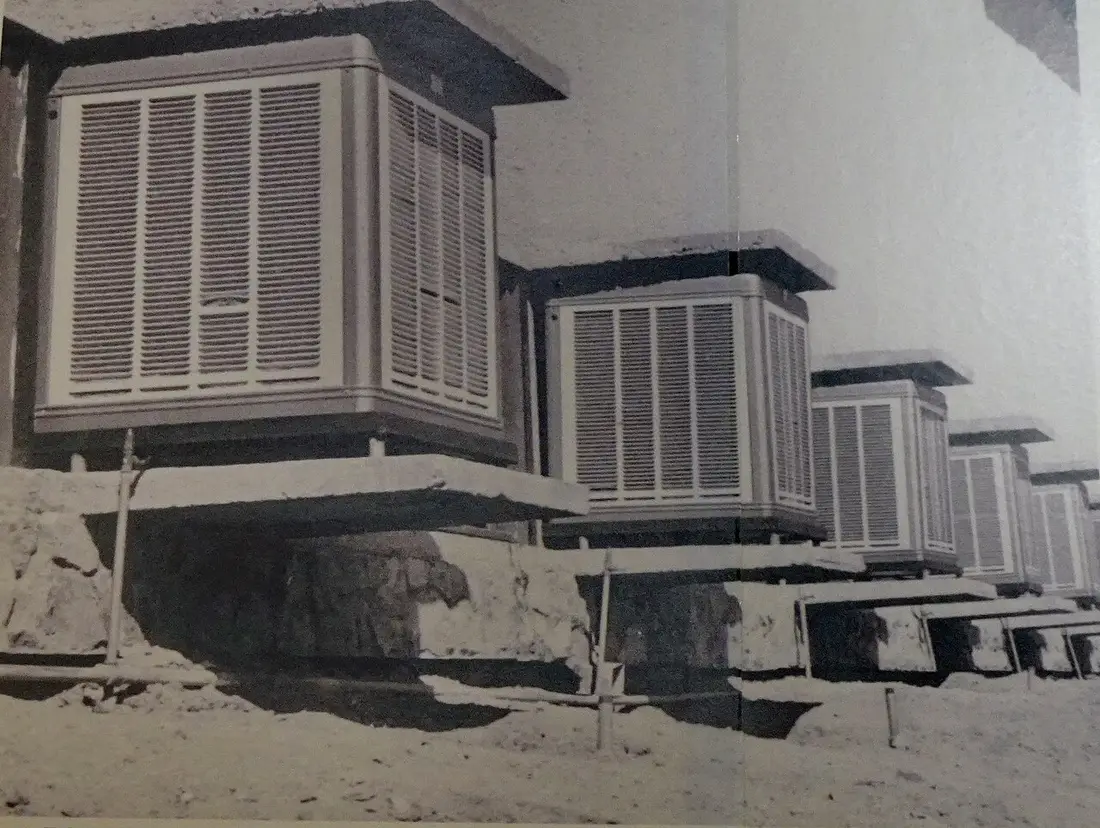
From April into early July, Tucson's air is a gift to evaporation: hot and bone dry. In that air a well-kept cooler holds a house in the seventies while drawing a fraction of the power a compressor draws, and it does it while bringing fresh, filtered, slightly humidified air through the house - air quality that sealed refrigerated houses envy in the dusty season. For these months, in the housing built for it, evaporative cooling is not the economy option. It is simply the better machine.
Its costs are real but different: water by the season rather than power by the hour, pads and pumps consumed on a rhythm, and a roof unit living with the mineral load of Tucson's hard water. Households that keep the rhythm - spring start-up, mid-season check, fall shutdown - report the same verdict across decades: the cooler's dry-season performance is the reason it survives every obituary the industry writes for it.
The Monsoon: Refrigeration's Answer
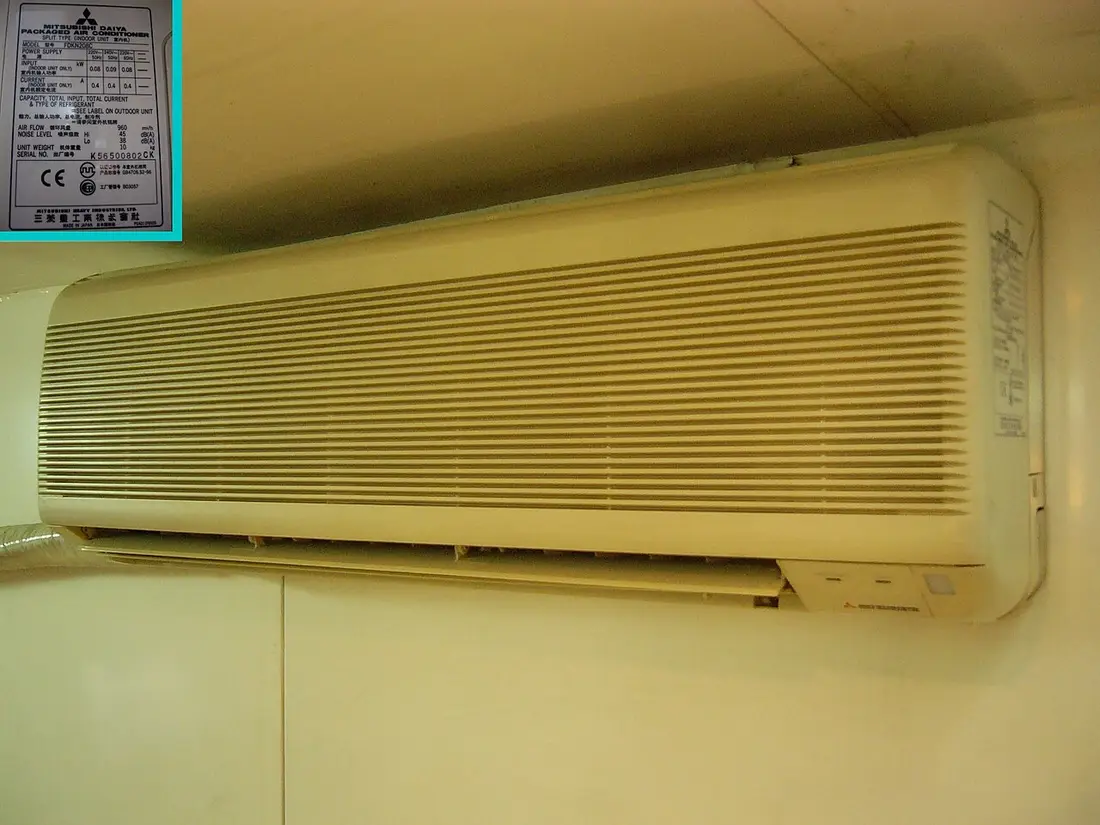
Then the humidity arrives, and physics changes sides. Evaporation spends the gap between temperature and saturation; the monsoon closes that gap, and the cooler - in perfect condition, perfectly kept - can only move damp air a few degrees down. Refrigerated air does not care about the gap: it cools and dries in the same pass, holding a house at a set temperature through the stickiest August night the desert can assemble.
Six weeks is the honest size of refrigeration's home season - though they are the six weeks when tempers, sleep and tempers again are shortest. Everything else being equal, households divide by their relationship to those weeks: some treat them as the desert's tax, paid in patience; others as the entire reason for the conversion. Both are rational. What is not rational is deciding in the third week of August, which is when most decisions get made - and why this guide exists to be read in spring.
PROBLEM
→
SOLUTION
The House Casts the Deciding Vote
Conversion arithmetic is house-specific to a degree the advertisements flatten. A house with sound ductwork and electrical capacity converts at one price; an adobe with no ducts, a full panel and flat roof converts at a very different one - sometimes better answered by ductless equipment room by room, or by the valley's classic hybrid: cooler for the dry months, a refrigerated system for the monsoon, each used in its season and never together.
The intangibles vote too. Coolers ask for open windows and a seasonal rhythm some households love and some resent. Refrigeration asks for a sealed house and a power bill with a summer peak. Water matters in a desert city - a cooler drinks it by the season - and power matters to every budget. The right answer is the one whose whole ledger, not just its loudest line, fits the household reading it.
The Water Ledger, Stated Plainly
A cooler household's water use is real and should be counted without flinching: a season of evaporation and bleed-off adds up to a meaningful volume, in a city that thinks about water seriously. Set against it, honestly, is the power ledger of the refrigerated alternative - compressors across a metro draw on a grid whose summer peak is the region's defining infrastructure problem. Neither ledger is a trump card; both belong on the page where the household's decision gets made.
What the comparison resists is the single-number summary. The household that values its water highly and tolerates the monsoon has one right answer; the household with a newborn, a home business or a medical relationship to heat has another. Technology choices in a desert city are household philosophy with equipment attached, and the honest guide's job is the ledger, not the verdict.
What the Neighbors Actually Did
The valley's lived answer, visible on any older street, is pluralism: coolers kept and loved on the adobes, refrigeration on the retrofits, hybrids on the houses in between, ductless zones appearing wherever a casita or an addition writes its own question. The technologies have sorted themselves by housing far more than by ideology.
That sorting is the market's version of this guide: match the machine to the house's physics and the household's life, and the desert - which offers both the country's driest heat and a real monsoon - will reward the match whichever technology it names.
Myth vs Fact
The Myth
The swamp cooler is obsolete - modern homes have simply moved past it. It is a verdict imported from humid climates, where the machine never worked to begin with.
VS
The Fact
In dry desert air, evaporative cooling remains a rational, efficient technology with a defined season. Its limits are the monsoon's weeks, not the calendar's verdict. Tucson's older housing stock was built around those physics, and thousands of households run the numbers every spring and keep the cooler - correctly, for their houses.
The Related Service, In Depth
The evaporative cooler is the desert's own technology - older than the city grid, refined by a century of Sonoran summers - and it deserves to be judged on its physics rather than its nostalgia. In dry air it performs a genuine thermodynamic trick, trading water for cold at a rate refrigerated air cannot approach. Its limits are equally physical, written in the monsoon's humidity, and no salesmanship in either direction changes either number.
That is the service side of this guide's subject. When you are ready, the Evaporative Cooler Service page carries the process, the coverage by neighborhood and the number to call.
The Process, Step by Step
Score your house first
Ducts present and sound? Electrical capacity spare? Roof and water practical? The conversion's difficulty is written in these answers.
Put your household's monsoon tolerance in writing
Six humid weeks endured, supplemented or eliminated - decide which household yours is, in April, calmly.
Price the real options for this house
Cooler kept and serviced, conversion, hybrid, ductless by zone - scoped per address, not per brochure.
Decide on the full ledger
Running costs in both currencies - power and water - maintenance rhythm, comfort by month, and the home's value story, all on one page.
Prevention Checklist
If you keep the cooler, keep its calendar: start-up, mid-season check, shutdown - the rhythm is the reliability.
Decide the monsoon question in spring, whichever way it lands; August decisions are made at August prices.
If you run both systems, never run them together, and make the changeover date a household institution.
Watch the water side: pads, bleed-off and pan are where cooler economics and cooler failures both live.
Revisit the decision when the house changes - new ducts, an addition, a panel upgrade can move the answer.
A Field Checklist for Your Own Home
Write down your system's honest monsoon experience last year - nights, tempers, workarounds - while it is still evidence.
Check the house's conversion facts
ducts present? panel capacity? roof type? The answer set prices the question.
Inventory the cooler's condition before deciding its future: pads, pump, pan and cabinet each get a verdict.
Decide the household's monsoon tolerance as a household, in spring, and write the decision down for August.
What the Paperwork Should Show
When you request a comparison assessment, expect a house-specific ledger: the cooler's service state and remaining value, the conversion's true scope - equipment, ducts, electrical, roof work - the hybrid option drawn for your floor plan, and running-cost comparisons stated with their assumptions visible.
You should also receive the recommendation with its reasoning attached - which option, for this house and this household, and what would change the answer - so the decision can be revisited intelligently when the house changes.
How a Professional Works This Problem
A professional assessment of this choice prices the actual house: the duct conversion's real scope, the electrical panel's true capacity, the cooler system's remaining value, the household's monsoon tolerance quantified as best it can be. It also refuses false precision - the answer comes back as a ledger with a recommendation, not a number with a slogan, because the decision is half engineering and half household.
Mistakes That Make It Worse
Deciding in the third week of the monsoon
Every price, schedule and judgment in this choice is at its worst in August. Spring exists for this decision.
Counting only the power bill in the comparison: Water, pads, maintenance rhythm and the home's value story are all lines in the real ledger.
Converting the equipment and skipping the ducts: Refrigerated air through a cooler-era duct layout delivers cooler-era distribution at compressor prices.
Letting a dead cooler make the decision by default: A failed pump in June is a repair; it is not a referendum on the technology.
The Bottom Line
The desert does not grade this choice; households live it. Matched to the house's physics and the family's honest tolerance, either technology - or the valley's classic partnership of both - will serve for decades. The only wrong version is the decision made in August, at August prices, against a deadline set by the weather.
Desert winter heating is a night problem: mild days forgive everything, and radiational-cooling nights after clear days expose every weakness in equipment and envelope alike.
Desert duty spends equipment faster than the national lifespan figures assume - run-hours, attic and rooftop heat, and dust are the three taxes every Tucson system pays.
Is a swamp cooler really cheaper to run in Tucson?
In the dry months, substantially: its load is a fan and a small pump against a compressor's draw, and the water it consumes costs less than the power it saves in most households' arithmetic. The honest ledger is annual, though - pads, pumps, water and the monsoon weeks all enter it - and it is per-house enough that this guide refuses to give a universal number.
Why do so many new Tucson homes skip coolers entirely?
Builders answer to buyers who want set-and-forget comfort through the monsoon, and to duct and electrical designs standardized for refrigeration. It is a market answer, not a physics verdict - the same desert that fills new subdivisions with compressors still cools its older neighborhoods with evaporation every dry day of summer.
Can I keep my cooler and just add AC for the monsoon?
Yes - the hybrid is a valley institution, with either a central refrigerated system or ductless zones carrying the humid weeks. The rules are simple: never both at once, ducts arranged so the partnership is clean, and the changeover treated as a date rather than a debate. For many adobe and older homes it is the most cost-honest comfort available.
My cooler works but the house still feels miserable in June. What is wrong?
In dry June air, misery is a finding, not a fate: scaled or collapsed pads, water not reaching the pads evenly, airflow choked, or a house whose exhaust path is sealed shut. Each is a service item. The misery that is not a finding arrives with the monsoon - and that one is physics, answered in this guide's second section.
Please note: Tucson HVAC Pros is an independent directory and referral service, not an HVAC contractor. The professionals reachable through this site are independent businesses; any agreement for work is between you and the professional you engage. Service information on this site is general educational material - the scope of any real HVAC work is set by an on-site inspection.
An AC That Quit in the Heat, a Room That Will Not Cool or a System Due for Service?
One call connects you with an HVAC professional serving Tucson and the surrounding communities - assessment, repair, service and installation.