Evaporative Cooler Service Through the Tucson Year
Tucson winters are mild with sharp edges: bright days in the sixties and seventies, desert nights that can drop below freezing, and cold snaps that test heat pumps and furnaces that slept all summer. Winter is a good service season here - heating checks, duct work and planned replacements happen without the summer queue - and the systems read in winter get their fixes long before the spring heat starts its own inspection.
Summer splits in two: the dry furnace of June and early July, when the heat is at its peak and systems run from mid-morning to past midnight, and the monsoon weeks that follow, when humidity joins the heat and the failure mode changes. Most breakdowns are discovered in summer - the wear happened across a decade of summers, and the hottest week is simply when the margin runs out. Shade, airflow and a clean coil are the season's quiet essentials.
Spring is the preparation season in Tucson, and everyone who has lived through a June here knows it. March through May is when systems get their honest read: refrigerant charge, airflow, duct condition, cooler pads and pumps - while the weather is still mild enough that a discovered problem is an appointment, not an emergency. The first 100-degree day usually arrives before May is out, and it collects every debt the spring skipped.
Evaporative Cooler Service in Depth
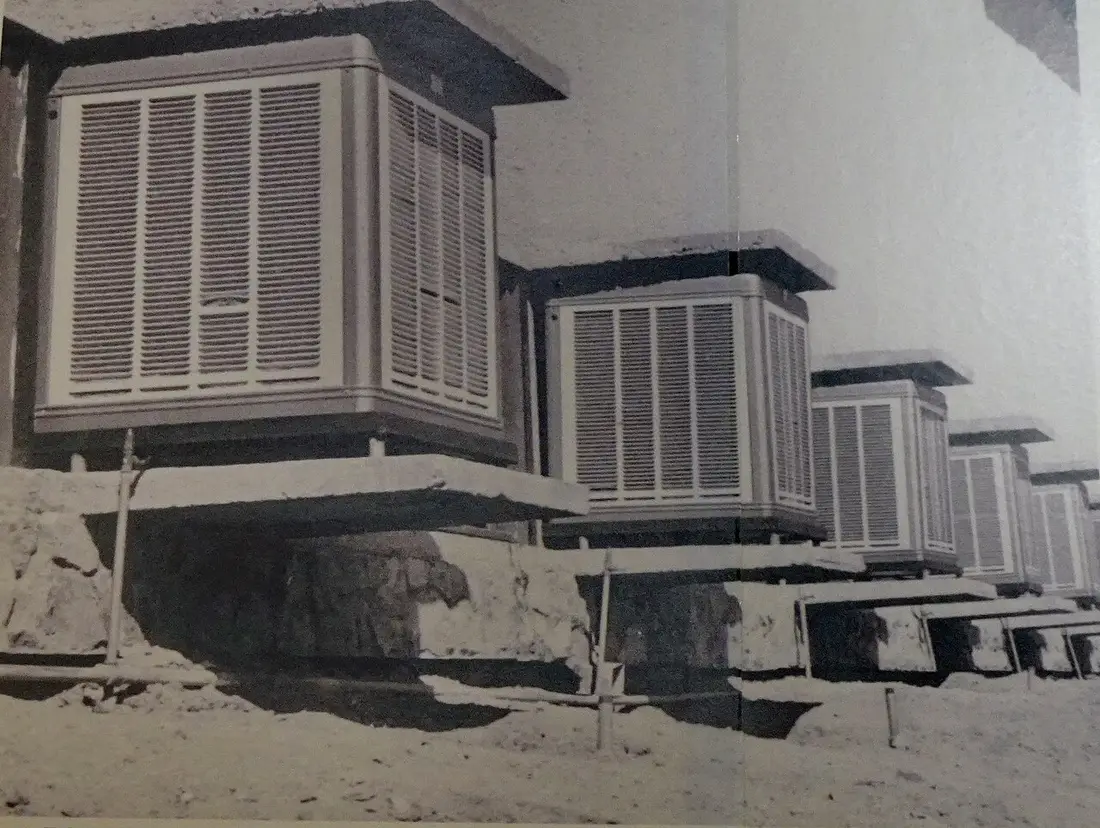
The evaporative cooler is the desert's own technology - older than the city grid, refined by a century of Sonoran summers - and it deserves to be judged on its physics rather than its nostalgia. In dry air it performs a genuine thermodynamic trick, trading water for cold at a rate refrigerated air cannot approach. Its limits are equally physical, written in the monsoon's humidity, and no salesmanship in either direction changes either number.
What the cooler asks in return is rhythm: pads, water and airflow attended on the desert's calendar, and an honest household decision about the humid weeks. The owners who keep that rhythm get decades of cheap, pleasant cooling from machinery a child can understand. The ones who treat it as a box that either works or does not meet it as a story about a pump, a pan of scale and the hottest weekend of the year - the three characters in every neglected cooler's ending.
Choosing the Right Help
Choosing cooler help is choosing seasonal reliability. Ask what the start-up includes - pads, pump, water, bearings, the pan - and whether the monsoon conversation happens in spring. The service that treats the cooler as a system with a calendar will keep yours boring for years; the one that treats it as a fan with a hose will meet you again in July.
The Climate Behind It
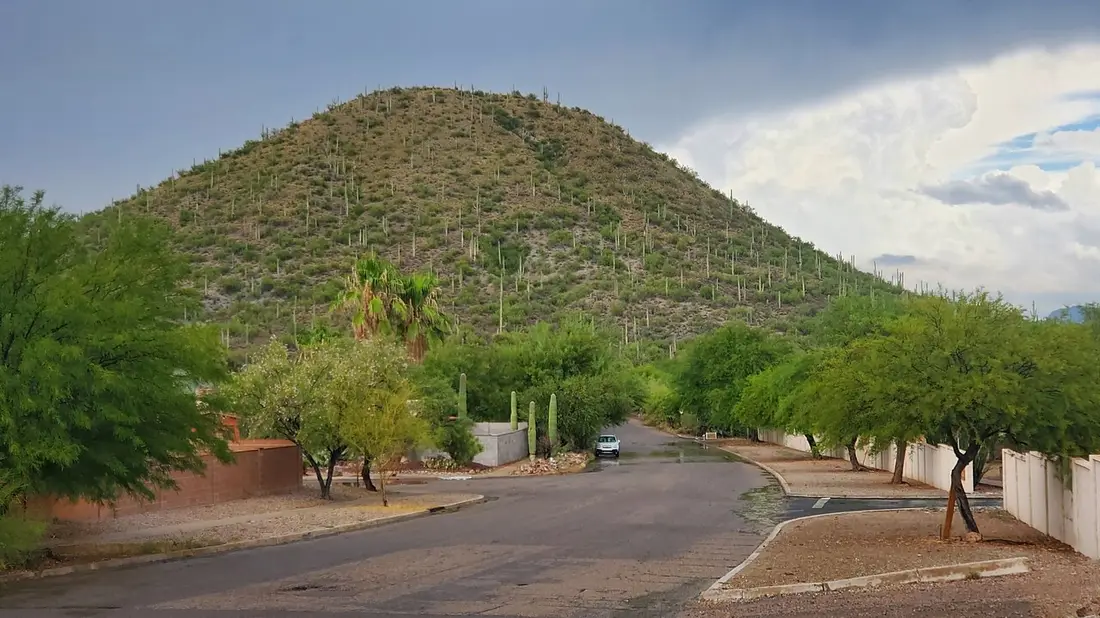
Tucson sits in the Sonoran Desert at the meeting of five mountain ranges, and the desert writes the cooling calendar here: a long, fierce summer in which June afternoons pass 110 degrees, a monsoon season that trades dry heat for humid heat overnight, and winters mild enough that heating is a supporting act. An air conditioner in Tucson is not a comfort appliance - for a large part of the year it is the system the house cannot be lived in without.
Heat load is the signature force. A Tucson roof in June absorbs sun from before nine until after six, attic temperatures climb far past anything the equipment below was tested at, and west-facing glass turns rooms into solar ovens by late afternoon. A system's real rating in this city is not its nameplate - it is what it still delivers at four in the afternoon in the third week of June, after a decade of desert summers.
How Evaporative Cooler Service Works
Spring start-up, done completely
The pan is cleaned of last year's mineral sediment, pads inspected or replaced, the pump tested, the belt and bearings checked, water lines and float set - the whole machine readied before the heat.
Water set for Tucson's hardness
Bleed-off and water level are adjusted so the pads stay wet without scaling themselves to stone by July.
Airflow verified at the vents
The house end gets its check too: vents open, windows cracked for the exhaust path a cooler requires, output measured room by room.
The monsoon conversation, in spring
You hear the honest forecast for the humid weeks - what this cooler will and will not do in August - and the options, while there is still time to choose.
Doing It Yourself vs a Professional
The DIY Route
- Running a cooler with scaled, collapsed pads and calling it serviced - the machine moves air, not cooling, and the motor pays the difference
- Sealing the house tight with a cooler running defeats the physics: evaporative air must exhaust, or the house turns into the swamp the name promises
- Letting the pan sit in water all winter to 'save the trouble' buys rust, scale and a spring smell that takes weeks to leave
VS
The Professional Route
- Treats the cooler as a system - pads, water, airflow and the house's exhaust path - not just a box on the roof
- Tells you in spring, with numbers, what the monsoon will do to your cooling - and what the options cost in comfort, honestly stated
- Schedules the small certainties - pads, pumps, bearings - on the calendar instead of the emergency
Keep It From Coming Back
A cooler's reliability is a calendar, not a quality. These habits are that calendar, written for Tucson water and Tucson seasons.
- Never skip the spring start-up: every part that fails mid-season is visible, cheap and available in April.
- Watch the water: a cooler using no water is not cooling, and one leaking water is writing on the roof.
- Crack the right windows when the cooler runs - evaporative air must leave the house to keep working, and the exhaust path decides which rooms cool.
- Shut down and drain the cooler properly in fall; a winter of standing water is next spring's rust and smell.
- Keep the monsoon plan honest - know in spring what August will feel like, and decide then, not during it.