Tucson HVAC Services

Thermostat Installation in Tucson, AZ

Thermostat installation and service in Tucson - modern controls matched to heat pumps, coolers and staged equipment, programmed for desert schedules, and diagnosed when the control is the fault.

The monsoon is the second force, and it changes the problem rather than pausing it. From July into September the humidity arrives with the storms, evaporative coolers lose their edge exactly when the heat is still high, and refrigerated systems suddenly carry a moisture load they never see in May. Dust rides the same storms - haboobs and outflow winds cake outdoor coils and load filters in a single evening.

The equipment stock matches the city's history: evaporative coolers on the oldest adobe and postwar housing, rooftop package units on the flat-roofed brick ranches of midtown and the east side, split systems in the subdivision decades, and heat pumps across the newer master-planned communities. Each carries its own Tucson fate - the cooler's monsoon limits, the package unit's baked roof life, the split system's attic ducts - and the pages here are organized around exactly that.

Signs You Need Thermostat Installation

The displayed temperature is not the room's

A thermostat reading its own wall - sunlit, above a lamp, in the return's draft - runs the whole system from fiction. Placement faults feel like equipment faults and cost like them too.

The heat pump's backup heat runs too much

A control not configured for heat pump duty - or configured by its previous owner for another system entirely - can call the expensive heat early and often. This is a settings verdict with a power bill attached.

Short cycles or long overshoots

Anticipation and cycle-rate settings decide how the system breathes. Wrong settings make new equipment behave like worn equipment, in both directions.

The schedule is a stranger's

If the program running your house was set by a previous owner, a builder or a default, the system is obeying someone else's life. Reprogramming to your actual days is the least costly comfort in the trade.

A smart thermostat keeps rebooting or dropping off

Power-stealing controls on systems without a common wire brown-out and reboot - the control is starving, not broken, and the fix is wiring, not another thermostat.

The system and the control disagree

New equipment on an old control - or the reverse - loses the features each was built for: staging, defrost logic, humidity control. The mismatch is invisible until someone reads both manuals at once.

Why Thermostat Installation Is a Standing Job in Tucson

Tucson's thermostat story is a heat pump story: the valley's dominant equipment needs controls that understand reversing valves, defrost and backup-heat restraint - calling the electric strips only when the pump genuinely cannot carry the load. A plain cooling thermostat on a heat pump can leave the reversing valve unpowered all winter. The control's configuration page, unglamorous as it sounds, is where a season of bills is decided.

Placement is the second chapter. Desert sun through a west window can park a wall at ninety degrees while the house sits at seventy-six, and the system will chase the wall all afternoon. Return-air drafts, kitchen heat and direct sun on the sensor are the classic Tucson trio - and each is fixable by relocation once it is diagnosed as placement rather than equipment.

The third chapter is the household. Valley homes live unusual schedules - snowbirds absent for months, shift workers sleeping through the heat, casitas occupied seasonally. Modern controls earn their keep exactly here: schedules that fit the real week, remote alerts that report a failure in an empty house before the interior cooks, and vacation holds that protect the house without cooling it for nobody.

Thermostat Installation Through the Tucson Year

Tucson winters are mild with sharp edges: bright days in the sixties and seventies, desert nights that can drop below freezing, and cold snaps that test heat pumps and furnaces that slept all summer. Winter is a good service season here - heating checks, duct work and planned replacements happen without the summer queue - and the systems read in winter get their fixes long before the spring heat starts its own inspection.

Spring is the preparation season in Tucson, and everyone who has lived through a June here knows it. March through May is when systems get their honest read: refrigerant charge, airflow, duct condition, cooler pads and pumps - while the weather is still mild enough that a discovered problem is an appointment, not an emergency. The first 100-degree day usually arrives before May is out, and it collects every debt the spring skipped.

Summer splits in two: the dry furnace of June and early July, when the heat is at its peak and systems run from mid-morning to past midnight, and the monsoon weeks that follow, when humidity joins the heat and the failure mode changes. Most breakdowns are discovered in summer - the wear happened across a decade of summers, and the hottest week is simply when the margin runs out. Shade, airflow and a clean coil are the season's quiet essentials.

Thermostat Installation in Depth

The thermostat is the system's only diplomat: it speaks for the house to the machine and for the machine to the house, and both sides suffer when it mistranslates. A misconfigured heat pump control, a sensor reading a sunlit wall, a schedule from a previous life - these are translation errors with monthly invoices. The service that treats the control as the system's interpreter, fluent in both languages, fixes complaints that part-swapping never reaches.

There is a humility lesson in the device as well. Most households blame the largest, loudest, most expensive component for comfort failures; the thermostat teaches that the smallest and least costly can author them all. The discipline it rewards - read the control's configuration before condemning the machine - generalizes across the whole trade, and the technicians who practice it are recognizable by how rarely they replace parts that were never broken.

Choosing the Right Help

Choosing thermostat help means finding the rare service that starts at the machine, not the gadget shelf. Ask whether the control will be specified from your equipment's requirements - heat pump logic, staging, wiring - and whether placement gets checked. The installer who asks about your system's manual before showing you a screen full of features understands the assignment.

The Climate Behind It

Tucson sits in the Sonoran Desert at the meeting of five mountain ranges, and the desert writes the cooling calendar here: a long, fierce summer in which June afternoons pass 110 degrees, a monsoon season that trades dry heat for humid heat overnight, and winters mild enough that heating is a supporting act. An air conditioner in Tucson is not a comfort appliance - for a large part of the year it is the system the house cannot be lived in without.

Heat load is the signature force. A Tucson roof in June absorbs sun from before nine until after six, attic temperatures climb far past anything the equipment below was tested at, and west-facing glass turns rooms into solar ovens by late afternoon. A system's real rating in this city is not its nameplate - it is what it still delivers at four in the afternoon in the third week of June, after a decade of desert summers.

How Thermostat Installation Works

Read the equipment first

The visit starts at the machine - heat pump or conventional, staged or single, cooler or refrigerated - because the control must be specified for the equipment it will command.

Check the wiring and placement

The common wire, the run's condition, and the wall's sun and draft exposure are verified before any control is mounted.

Install and configure for the system

Equipment type, staging, defrost and backup-heat behavior, cycle rates - the configuration is set for this house's machine, not left at factory defaults.

Program it with you, not for you

The schedule is built from your actual week, the app paired where fitted, and the manual settings explained - a control you understand is a control that stays programmed.

Doing It Yourself vs a Professional

The DIY Route

  • Swapping in a smart thermostat without checking for a common wire buys a season of reboots and mysterious shutdowns
  • Setting a heat pump's control to 'cool only' equipment type leaves winter to the backup strips at full tariff
  • Programming deep setbacks for a desert summer day asks the system to recover through the worst heat - in Tucson, shallow setbacks win
VS

The Professional Route

  • Specifies the control from the equipment list, not the gadget shelf
  • Verifies wiring and sensor placement, and relocates the control when the wall is lying
  • Configures heat pump logic and backup-heat restraint explicitly, then walks you through the program

Keep It From Coming Back

The control rewards attention out of all proportion to its size. These habits keep the smallest part of the system from authoring its largest complaints.

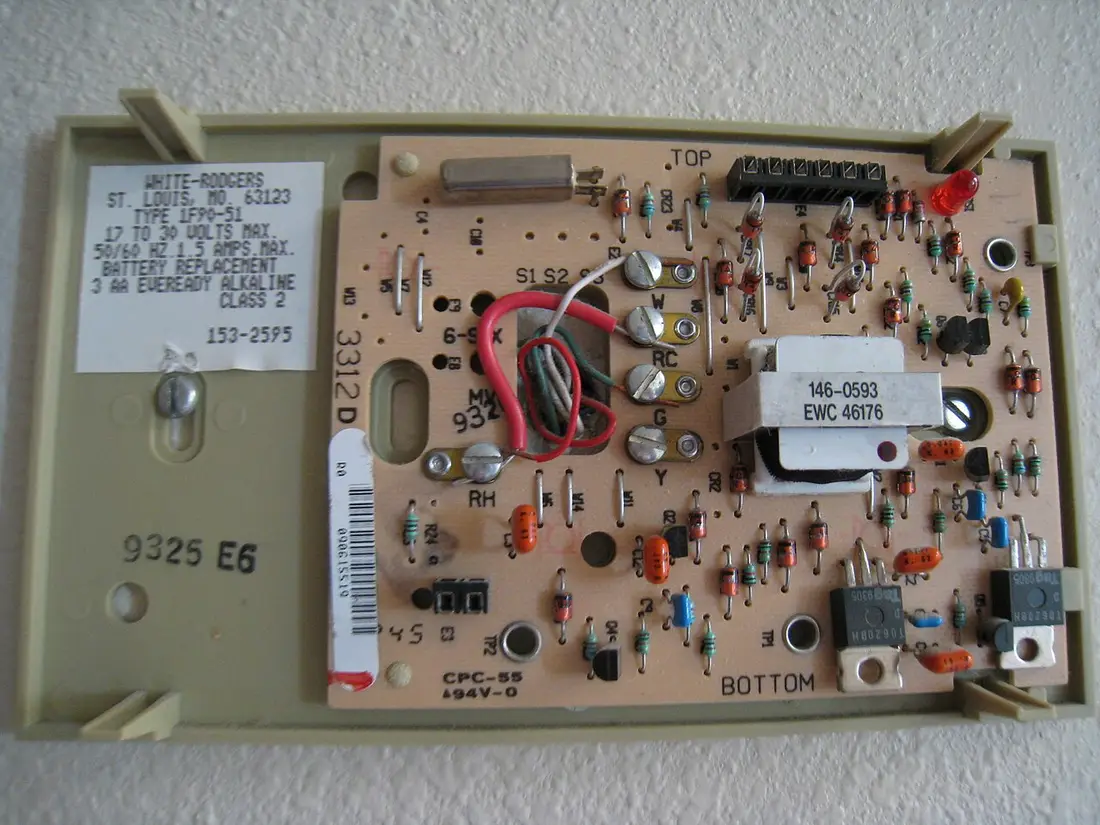
  • Photograph the old thermostat's wiring before anything is ever disconnected - future you, or a future technician, will be grateful.
  • When equipment is replaced, ask whether the control is being matched to it in the same project; orphans happen by default.
  • Review the schedule twice a year - at the cooling and heating changeovers - the way you would any other seasonal setting.
  • Replace control batteries on a calendar rhythm if yours uses them; the two-dollar battery failure always schedules itself for a holiday.
  • Keep the sensor's wall honest: no new lamp, picture light or sun exposure added beside the thermostat without expecting the system to notice.
Thermostat Installation in the Surrounding Communities

The communities around Tucson share its heat and its monsoon - with their own twists of elevation, housing age and desert-edge exposure.

Thermostat Installation in Corona de Tucson

Corona de Tucson is the quiet community on the Santa Rita Mountains' north slope, south of the city along the road to Sonoita: 1970s ranchettes joined by newer subdivisions, all facing north across the whole Tucson valley. Nights cool faster here than anywhere on this list - elevation and open slope see to that.

Thermostat Installation in Sahuarita

Sahuarita is the fast-growing town twenty minutes south on I-19: Rancho Sahuarita's lake-centered master plan, newer subdivisions along the Santa Cruz valley, and pecan country toward Green Valley. It has grown from ranch land to a full suburb in a generation, and its rooftops are correspondingly young.

Thermostat Installation in Green Valley

Green Valley is the valley's retirement country: a 55-plus community of single-story homes, townhouses and patio homes built from the 1960s onward below the Santa Ritas, famous for its recreation centers and its seasonal residents. Summer empties a share of its streets as winter visitors leave - and the houses they leave behind still face the full desert summer.

Thermostat Installation in Catalina

Catalina spreads across the high plain north of the Santa Catalina Mountains: the SaddleBrooke retirement communities, the older ranching settlement along Oracle Road, and new subdivisions at the range's feet. At a higher elevation than the city, it trades a few degrees of heat for long views of the range's whole northern face.

Where Thermostat Installation Is Needed Most

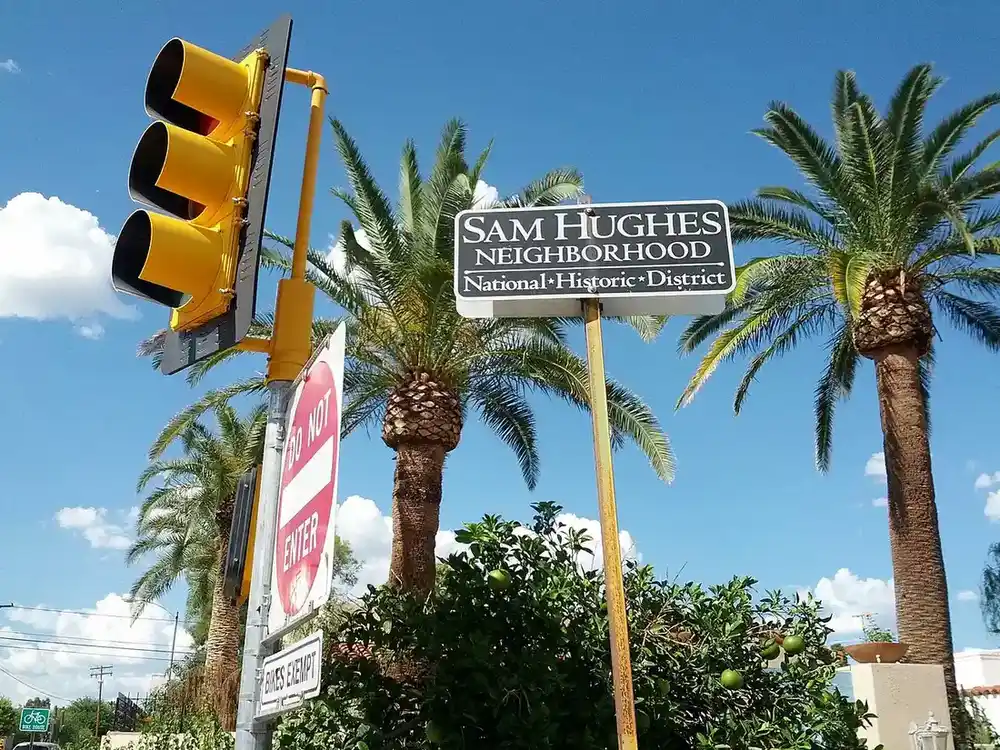
In the historic core and the central neighborhoods - Downtown Tucson, Barrio Viejo, Armory Park, University Area, Sam Hughes and Midtown Tucson, Menlo Park, South Tucson, Eastside Tucson, Tanque Verde - the equipment runs from the valley's oldest rooftop package units and surviving swamp coolers to the split systems of the postwar subdivisions, and thermostat installation follows that record: legacy equipment care on the older streets, first-replacement decisions in the subdivisions, and heat exposure that grows toward the open edges.

Across the east side, the foothills and the northwest growth side - Catalina Foothills, Sabino Canyon Area, Casas Adobes, Flowing Wells, Northwest Tucson, Oro Valley and Marana, Picture Rocks, Drexel Heights, Valencia West, Rita Ranch, Vail - sit the subdivision waves of the 1970s onward, the foothills' custom stock and some of the valley's heaviest cooling loads, which together make this the steadiest thermostat installation territory in the city.

Beyond the city line, the same work runs in Corona de Tucson, Sahuarita, Green Valley, Catalina, Three Points, Avra Valley - fast-growing suburbs, retirement communities and desert-edge towns where elevation, acreage homes and wide-open exposure add their own chapters. Every one of these area pages carries the local detail for thermostat installation in that community.

Coverage, In Full

Thermostat Installation runs across the whole service map: Downtown Tucson, Barrio Viejo and Armory Park; the University Area and Sam Hughes; Midtown; Menlo Park and South Tucson; the Eastside; Tanque Verde and Sabino Canyon; the Catalina Foothills; Casas Adobes and Flowing Wells; Northwest Tucson; and beyond the city in Oro Valley, Marana, Picture Rocks, Drexel Heights, Valencia West, Rita Ranch, Vail, Corona de Tucson, Sahuarita, Green Valley, Catalina, Three Points and Avra Valley. One call covers all of it - the local pages above carry the detail for each. If your street is not named here, call anyway: routes grow with demand, and most Pima County addresses are already within reach of a scheduled run.

From the Tucson HVAC Guides

Monsoon Season: A Tucson Homeowner's HVAC Guide

The monsoon does not pause the cooling problem, it changes it: humidity replaces dry heat as the enemy, and systems sized and set for June meet a different exam in July. Prepare on three fronts - the cooler's changeover, the refrigerated system's humidity behavior, and dust discipline after every storm.

Read the Guide

The Tucson AC Maintenance Calendar: Month by Month

Tucson HVAC care is a calendar with four real appointments: spring service before the heat, dust discipline through summer, the monsoon changeover, and fall's honest accounting. Match the rhythm to your equipment - coolers live by start-up and changeover, heat pumps by two service modes, refrigerated systems by the spring measurement visit.

Read the Guide

Swamp Cooler vs Refrigerated Air in Tucson: An Honest Guide

Neither technology wins outright: the cooler owns the dry months on running cost, refrigerated air owns the monsoon, and the house itself casts the deciding vote. Decide per house - its ducts, electrical capacity, water, and the household's tolerance for six humid weeks - not per advertisement.

Read the Guide

Thermostat Installation Questions

What is a C-wire and why does it matter?

The common wire feeds continuous power to modern controls. Without it, many smart thermostats steal sips of power through the equipment circuit - and some systems answer with reboots, chatter or shutdowns. Adding the wire, or choosing a control designed for its absence, is a standard part of a proper installation.

Can a thermostat serve an evaporative cooler?

Yes, with the right control: cooler thermostats manage the fan speeds and the pump as their own stages, a different logic from refrigerated equipment. Some households run separate controls for a cooler and a refrigerated system sharing a house. The control must match the machine's language.

How long do thermostats last?

Mechanical and early electronic controls can run for decades while quietly losing accuracy; modern controls age with their electronics and batteries. A control whose readings drift - verifiable against a simple thermometer at its own wall - is a replacement candidate regardless of age.

What affects the cost of thermostat work in Tucson?

The control class chosen, the wiring present - adding a common wire is real work on some runs - placement relocation if the wall demands it, and configuration complexity, heat pumps and multi-zone homes taking more care. The equipment read comes first; the scope and numbers follow it plainly.

Can a thermostat really be the problem in my Tucson home?

Regularly. The control commands everything and senses one square foot of wall; between misconfiguration, bad placement, failing sensors and starving power, it authors a large share of 'system' complaints. The good news is that control faults are the least costly system faults to fix - once they are diagnosed as control faults and not equipment.

What thermostat suits a heat pump in Tucson?

One built for heat pump duty: it must manage the reversing valve, time defrost cooperation, and - most expensively important - restrain the backup heat, calling it only when the pump truly cannot hold the house. Configured right, it is invisible. Configured as a plain AC control, it can quietly double a winter bill.

Are smart thermostats worth it in Tucson?

For the valley's particular lives, often yes: remote alerts protect empty snowbird houses, schedules fit shift workers, and the usage reports teach households where their own bills live. For a simple house with a steady routine, a good programmable control does the same core job. The answer follows the household, not the technology.

Why does my Tucson home's temperature swing so much?

Swings come from cycle settings, sensor placement, system sizing - or a control reading a sunlit wall. Each cause has a different remedy, from a settings change to a relocation to an honest conversation about the equipment. The swing's pattern - time of day, season, which rooms - is the diagnostic, and it is readable on one visit.

Please note: Tucson HVAC Pros is an independent directory and referral service, not an HVAC contractor. The professionals reachable through this site are independent businesses; any agreement for work is between you and the professional you engage. Service information on this site is general educational material - the scope of any real HVAC work is set by an on-site inspection.

An AC That Quit in the Heat, a Room That Will Not Cool or a System Due for Service?

One call connects you with an HVAC professional serving Tucson and the surrounding communities - assessment, repair, service and installation.

📞 Call Now
📞 Call Now